
A medication schedule is only workable when the cat, method, timing, and sitter fit together.
Portland Cat Sitting can review oral medication, eye drops, topical treatment, injections, and subcutaneous fluids as part of a documented feline-care plan.
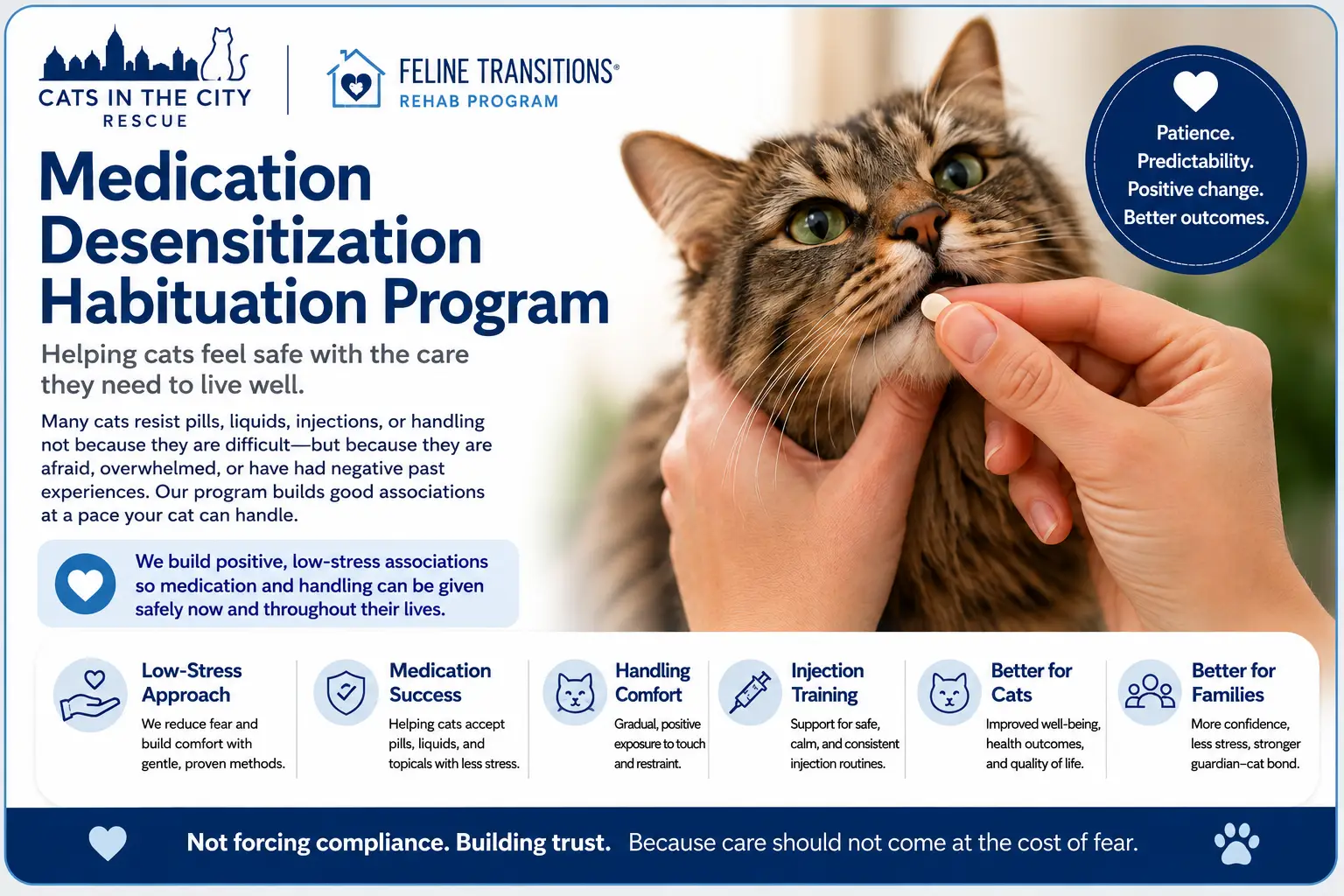
Each procedure requires clear instructions and realistic handling information.
The care team reviews the prescription, timing, route, equipment, storage, cat tolerance, sitter skill, visit frequency, and what should happen if administration is unsuccessful.
Oral medication
Tablets, capsules, or liquid medication may be considered when the method, dose, timing, and cat’s response are clearly documented.
Published fee: $15 per visitEye drops
Instructions should identify the correct eye, product, timing, number of drops, storage, contact precautions, and handling method.
Published fee: $15 per visitTopical medication
Provide the application site, amount, preparation, gloves or precautions, timing, and steps to prevent grooming or household exposure when directed.
Published fee: $15 per visitInjection medication
Injection care requires current written veterinary instructions, appropriate equipment, safe disposal, handling feasibility, and a clear missed-dose plan.
Published fee: $50 per injectionSubcutaneous fluids
The plan should describe volume, frequency, supplies, setup, restraint or cooperation method, and how incomplete administration is documented.
Published fee: $60 eachMultiple medications
Complex routines may require a longer visit, more frequent care, a specific sitter, a medication rehearsal, or a different care setting.
Review continuity needs →
“Takes medication well” is not enough information.
Explain whether the cat accepts medication in food, must be handled, hides when supplies appear, spits out pills, drools, scratches, bites, needs two people, or takes a long time to recover afterward.
The sitter should not guess whether to repeat, skip, or change a dose.
The guardian and prescribing veterinarian should define what counts as successful administration, what should be documented, who should be called, and what to do when the cat refuses or the dose is uncertain.
Prepare
Label supplies, doses, timing, storage, disposal, and the correct cat.
Administer
Use the approved method without improvising a new dose or route.
Verify and document
Record whether the dose was complete, partial, refused, vomited, lost, or uncertain.
Follow the written response
Contact the authorized party and use the veterinarian-directed plan.
Some medication routines need more continuity than visits provide.
Very narrow timing, frequent dosing, repeated handling conflict, insulin decisions, recovery monitoring, or a history of failed administration may require overnight care, rehabilitation, or feline-only boarding.
In-home sitting
Appropriate when the task fits scheduled visits and can be completed reliably in the familiar environment.
Boarding
May provide more observation, staffing, environmental control, and flexibility when the medication plan is layered.
Explore boarding →Medication habituation
When the task has become adversarial or impossible, a structured program may be needed before future travel care is sustainable.
Medication habituation →Send the prescription details and the handling reality.
Include the veterinarian, product, dose, route, timing, storage, supplies, cat response, prior failures, dates, and requested visit frequency.